

Learning to See with Words
On Robert Macfarlane’s Landmarks

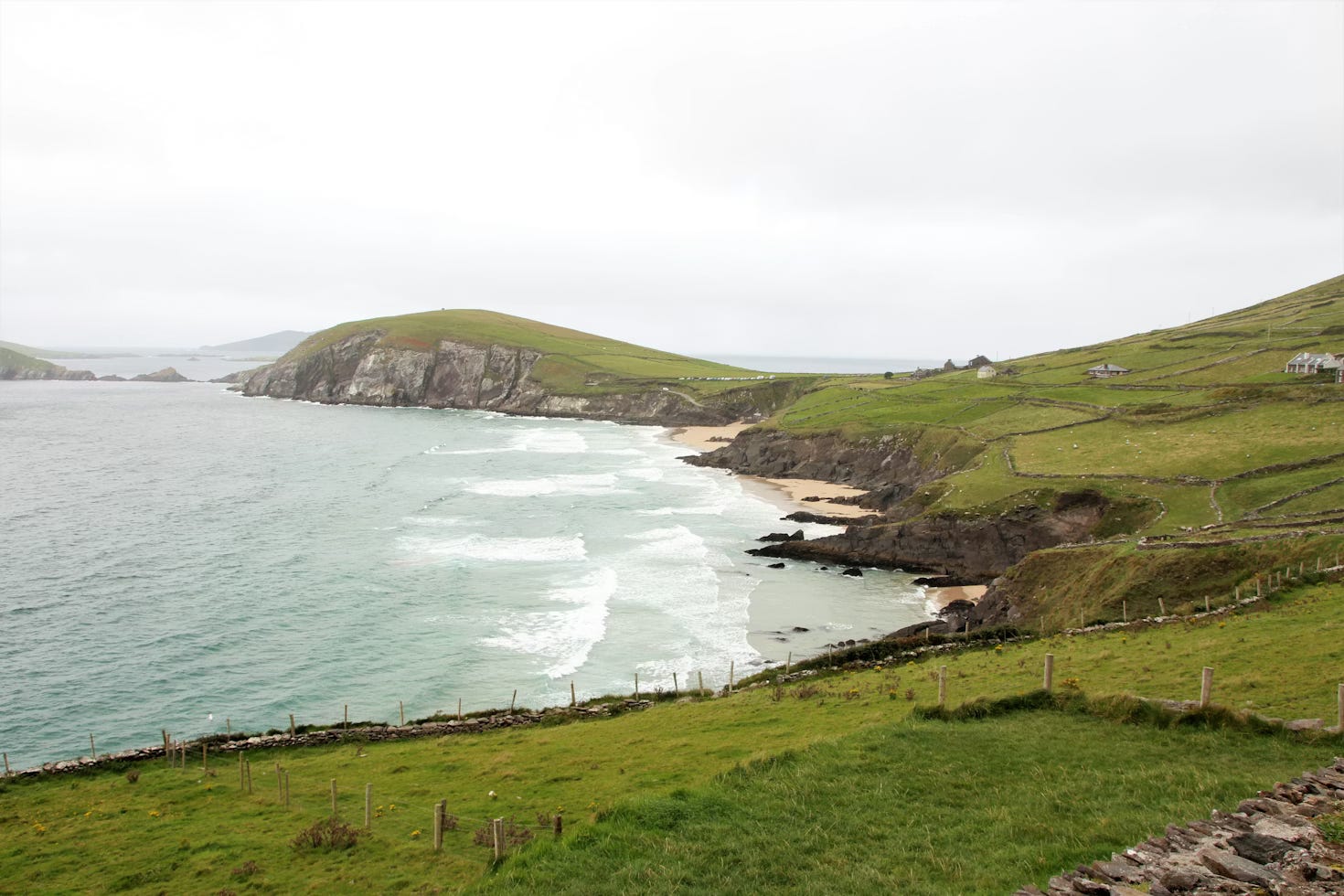
“This is a book about the power of language—strong style, single words—to shape our sense of place. It is a field guide to literature I love, and it is a word-hoard of the astonishing lexis for landscape that exists in the comprision of islands, rivers, strands, fells, lochs, cities, towns, corries, hedgerows, fields and edgelands uneasily known as Britain and Ireland.”
So begins Robert Macfarlane’s monumental—dare I say, essential—book on place-terms. But what makes language so essential to how we see and experience land? Words enchant. They hold meaning. They have a particularity that maps onto our experience with such precision that they can even renew our relationship to one another and creation.
If “A Holy Wonder” had a required reading list, Mcfarlane’s Landmarks would be one of the books on the list along with Annie Dillard in the “nature writing” section. These are books that are not just for writers but for anyone who dares to see that “the heavens declare the glory of God” (Psalm 19). Indeed, he journeys through the lochs and hedgerows of Britain and Ireland, but he taught me something of what I see even in suburban sprawl. Today is a bright January day in Wisconsin, and “ammil”—the sparkle of sunlight in frost—glistens on the grass and radiates off the concrete patio. Have you seen it before?
Landmarks is a book that at once defies genres while upholding and doing justice to its standards. I call it Poetry. A love letter. A bibliography. A glossary. An archive. A collection. I could go on, and perhaps that’s where its beauty lies. The structure of his book is fascinating. He breaks down themes and ends each chapter with a glossary (lots of words from poet Gerard Manley Hopkins too). But for this structure to be successful and not overwhelming he helps the reader out. He explains that his purpose is bibliographic and archival—not simply recording words but teaching his readers how those words recover our ability to see. It’s at once all these important acts of “gathering up of last things, lost things, late lustres.” But most importantly for a reader and writer to notice is that the book comprises all of these things carefully woven together.
The artist’s job is to put it together, make it hold, give it form. The mystery, the language, the sacred, the profane, the illuminations and the shadows, must all come together and make sense.
I realize this book might not be everyone’s cup of tea. It’s nature writing at its finest because the best nature writers are always telling us something other than just what they see in nature. But even just reading a few passages of this book enkindles a sense of wonder that has been lost when we look out at creation. In our age of distraction, the brightest and boldest next best thing is what our minds are attuned to. Books like this are a tune-up for the mind—a quiet, wordy way of seeing by the light of splendor and truth—that’s what precision (not perfection) can give us.
As a writer, I praise God when one of my readers says, “You put into words what I’ve tried to say for years.” This is why precision is so important when establishing connection with those who receive our vision. Mcfarlane saw this “grace of accuracy” (a phrase from Robert Lowell) in northern artists and writers specifically: “Thinking across their work, it becomes possible to deduce a shared metaphysic of northerliness: an exactness of sight; lyricism as a function of precision; an attraction to the crystalline image; shivers of longing, aurora-bursts of vision, and elegies of twilight.” Stunning.
Isn’t this the point of why we make, being in service of beauty for the sake of the common good? John Paul II comments on the artistic vocation in the service of beauty in Letter to Artists when he writes:
Those who perceive in themselves this kind of divine spark which is the artistic vocation—as poet, writer, sculptor, architect, musician, actor and so on—feel at the same time the obligation not to waste this talent but to develop it, in order to put it at the service of their neighbour and of humanity as a whole.
If you’ve read this book or want to, I’d love to hear what you think.
Are you a writer, publisher, or creative looking for writing or editing services?
I am a prompt, professional, and perceptive writer and editor who sees writing as a gift to be nurtured in a spirit of humility and charity. I bring responsiveness and keen insights to all my writing and editing projects as well as a rich intellectual background in a variety of topics and genres.
Thanks for subscribing to A Holy Wonder. If you’ve enjoyed the newsletter or something in it resonated with you, I invite you to share it with others.
This sounds really intriguing!
I’m going to add this book to my list! It sounds amazing!